What to Know About Aging Plumbing in Older Homes
Older homes have a character that’s hard to replicate. From original hardwood floors to unique architectural details, there’s plenty to appreciate about a house that’s stood for decades. But behind those charming features, you may have a plumbing system that’s showing its age.
As pipes, fixtures, and connections get older, they can become more vulnerable to corrosion, leaks, and reduced performance. Some problems develop gradually, making them difficult to recognize until they affect your daily routine.
Understanding how plumbing systems age can help you recognize potential issues, make informed repair decisions, and determine when upgrades may be worthwhile.
How Plumbing Systems Change as Homes Get Older
Your home’s plumbing system delivers clean water and carries wastewater away every day. Over time, its components experience wear from regular use, water pressure, mineral deposits, and environmental conditions.
Unlike a dripping faucet or running toilet, aging pipes don’t always show obvious signs of trouble. Mineral buildup may gradually restrict water flow, while corrosion can weaken metal pipes and older connections.
However, your home’s age doesn’t necessarily reflect the condition of its plumbing. A house built 70 years ago may have relatively new pipes if previous owners completed upgrades. Meanwhile, newer homes can experience plumbing problems due to installation issues or water conditions.
Understanding which materials your plumbing system contains is a useful starting point for evaluating its condition.
Common Plumbing Pipe Materials Found in Older Homes
Plumbing materials have changed considerably over the decades. If you own an older home in Ann Arbor or a surrounding community, your plumbing system may contain a combination of original pipes and newer replacements.
Each material has different characteristics and potential maintenance concerns.
Galvanized Steel Pipes
Galvanized steel was commonly used for residential water supply lines during the early and mid-20th century. These pipes have a protective zinc coating designed to reduce corrosion.
As that coating deteriorates, rust and mineral deposits can accumulate inside the pipes, restricting water flow. Over time, corrosion may also weaken the pipe walls and connections.
While galvanized pipes can remain functional for decades, extensive deterioration may make replacement more practical than repeated repairs.
Copper Pipes
Copper became a popular plumbing material because of its durability and resistance to many forms of corrosion. It’s still widely used in residential water supply systems today.
Although copper pipes can last for decades, water chemistry, installation quality, and environmental conditions can contribute to deterioration. Small pinhole leaks may develop, sometimes in areas concealed behind walls or ceilings.
A plumber can assess accessible copper piping and help determine whether isolated repairs or additional investigation are necessary.
Cast Iron Drain Pipes
Many older homes contain cast iron drain and waste pipes. These heavy metal pipes were commonly installed because of their strength and ability to reduce drainage noise.
Over time, corrosion can roughen their interior surfaces, encouraging debris accumulation and restricting wastewater flow. Advanced deterioration may eventually cause cracks or leaks.
If your home has original cast iron drainpipes, their condition becomes particularly relevant when you’re experiencing recurring drainage problems or planning renovations.
Older Plastic Plumbing Materials
Not all plastic plumbing materials have the same characteristics.
Polybutylene piping, installed in some homes from the late 1970s through the 1990s, has been associated with premature failures. Other materials, including PEX and PVC, have different applications and performance characteristics.
If you’re unsure what type of piping your home contains, a plumber can identify the materials and explain whether their condition warrants further attention.
Signs Your Home’s Plumbing May Be Aging
Plumbing systems rarely deteriorate all at once. Instead, you may notice gradual changes that suggest certain components need attention.
Some common warning signs include:
- Declining water pressure: Corrosion or mineral buildup inside older supply pipes may gradually restrict water flow.
- Discolored water: Brownish or rust-colored water can indicate corrosion in metal piping, although other causes are possible.
- Recurring pipe leaks: Multiple leaks in different sections of the same system may suggest widespread deterioration.
- Frequent drain problems: Repeated clogs or slow drainage can sometimes result from buildup or damage inside older drainpipes.
These symptoms don’t automatically mean your plumbing needs replacement. For example, weak water pressure at one faucet may result from a clogged aerator, while discoloration limited to hot water could involve your water heater.
The key is determining whether you’re experiencing an isolated issue or a recurring problem that needs further investigation.
How Long Do Plumbing Pipes Typically Last?
One of the most common questions about aging plumbing is how long different pipe materials should last.
There’s no universal expiration date for residential plumbing. Actual longevity depends on installation quality, water chemistry, maintenance, and operating conditions.
The following estimates provide general reference points:
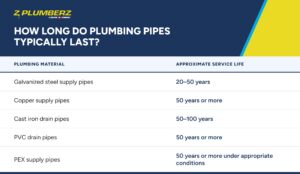
These ranges aren’t guarantees, and pipe age alone shouldn’t determine whether replacement is necessary.
For example, an older copper pipe may still perform well, while a newer pipe could require repairs because of installation problems or unfavorable water conditions.
A plumber can help assess the condition and performance of your existing pipes rather than relying solely on their age.
Hidden Plumbing Problems in Older Homes
Some plumbing problems develop out of sight, behind walls, beneath floors, or above finished ceilings.
Older fittings and connections may deteriorate gradually, allowing small leaks to develop without obvious symptoms. For example, a slow leak beneath a bathroom floor can damage surrounding materials before moisture becomes visible.
Previous renovations may also complicate an older home’s plumbing. Over the years, different owners might have replaced individual sections, connected different pipe materials, or modified the original layout.
These changes aren’t necessarily problematic, but poorly installed connections or aging components can create additional trouble spots.
When plumbing problems don’t have an obvious explanation, professional diagnostic methods can help identify their source and determine the appropriate next steps.
Should You Repair Aging Plumbing or Replace It?
Discovering older pipes doesn’t automatically mean you need to replace your entire plumbing system. The decision to repair or replace them depends on the extent of deterioration, the frequency of problems, and the condition of the surrounding pipes.
When Plumbing Repairs Make Sense
Repairs are often practical when a problem affects one connection or a limited section of otherwise functional piping.
For example, replacing a leaking fitting beneath your kitchen sink may resolve the issue without requiring additional work elsewhere.
If the surrounding pipes remain in good condition and problems aren’t recurring, a localized repair may provide a reliable solution.
When Pipe Replacement Is Worth Considering
Replacement becomes more appropriate when corrosion or deterioration affects multiple sections of the system.
For instance, repairing individual leaks in heavily corroded galvanized pipes won’t remove internal buildup or address weakened sections elsewhere.
Depending on your plumbing’s condition, replacing specific sections may offer better long-term value than continuing to make frequent repairs.
Is Whole-Home Repiping Necessary?
Whole-home repiping involves replacing most or all of your home’s existing water supply piping with newer materials.
It’s generally considered when deterioration is widespread or repeated repairs are no longer practical. However, not every older home requires a complete replacement.
Some homeowners benefit from phased upgrades, especially when plumbing improvements can be coordinated with renovations.
A professional evaluation can help you compare options based on your home’s condition, priorities, and budget.
Why Renovations Are a Good Time to Evaluate Old Plumbing
Planning a kitchen or bathroom renovation creates an opportunity to inspect plumbing that’s normally concealed behind walls, cabinets, or flooring.
For example, if you’re remodeling a bathroom in a home built in the 1950s, the fixtures may have been replaced several times while portions of the original piping remain.
Evaluating accessible pipes before installing new tile, cabinetry, or fixtures can help you determine whether upgrades would be worthwhile.
It’s also a good time to consider whether your existing plumbing can accommodate planned changes, such as relocating fixtures, adding a bathroom, or installing equipment with different water supply requirements.
Addressing necessary improvements during an existing renovation may reduce the need to reopen finished surfaces later.
Practical Ways to Maintain Plumbing in an Older Home
You don’t need to wait for a major problem to start paying closer attention to your plumbing system. A few consistent habits can help you recognize changes and make informed maintenance decisions.
- Identify your pipe materials. Check visible plumbing in your basement, utility room, or beneath sinks.
- Monitor plumbing performance. Pay attention to changes in water flow, drainage, and water appearance.
- Keep repair records. Document previous leaks, pipe replacements, and plumbing upgrades.
- Locate your main shutoff valve. Know how to stop the water supply when necessary.
- Address recurring problems. Have repeated plumbing issues evaluated to identify their underlying causes.
By keeping track of your plumbing’s condition, you’ll be better prepared to recognize problems before they require more extensive repairs.
What to Expect During an Older Home Plumbing Inspection
If you don’t know when your plumbing was last evaluated, a professional inspection can provide useful information about its condition.
Depending on your concerns and the accessibility of your plumbing, an evaluation may include:
- Supply lines: Checking visible pipes for corrosion, leaks, and deteriorating connections.
- Fixtures and shutoff valves: Examining accessible components for wear or operational problems.
- Water pressure: Checking pressure and investigating possible restrictions.
- Drain connections: Looking for visible damage, corrosion, or deterioration.
When recurring drainage problems are involved, a sewer camera inspection may be recommended to examine the interior of accessible drain or sewer lines.
Not every evaluation requires specialized equipment or opening finished walls. The approach depends on your plumbing’s condition and the problems you’ve experienced.
Following the inspection, you’ll have a better understanding of which components are functioning properly, which may need repairs, and whether replacements are worth considering.
Get Help With Aging Plumbing in Ann Arbor
Owning an older home doesn’t mean you have to deal with ongoing plumbing problems. Understanding your pipes, recognizing signs of deterioration, and making timely improvements can help keep your plumbing system functioning reliably.
Z PLUMBERZ of Ann Arbor provides residential plumbing services for homeowners dealing with aging pipes, recurring leaks, and other plumbing concerns. Whether you’re experiencing problems with existing plumbing or considering upgrades during a renovation, our team can discuss your concerns and help you explore available repair and replacement options.
Concerned about aging plumbing in your home? Contact Z PLUMBERZ of Ann Arbor today to discuss your plumbing concerns and schedule service.
Expert Tips
What Causes Noisy Pipes? A Guide to Common Plumbing Sounds
Learning what different plumbing sounds mean can help you recognize potential problems and determine when it’s time to call a…
5 Signs Your Garbage Disposal Needs Repair or Replacement
Knowing what different symptoms mean can help you decide whether you’re dealing with a repair or whether garbage disposal replacement…
Fall Plumbing Checklist for Ann Arbor Homeowners: What to Do Before the First Freeze
Use this fall plumbing checklist to work through the parts of your home that deserve attention before the first freeze,…