How Water Heaters are Drained and Flushed
Did you know that draining and flushing your water heater once a year drastically improves the lifespan of your water heater and lowers your water heating bill? It’s true! While water heater life spans can vary, some can last quite a long time if well cared for. Yearly maintenance of your water heater should include draining and flushing it to remove sediment build up over the year.
Draining your water heater can be done by yourself, but if you’re uncomfortable doing so or are new to water heater maintenance, you can always call your local plumber! No job is too small if it means keeping your plumbing in tip-top shape. If you are not sure where some of the various valves on your water heater are, you can look up the model or call a licensed plumber to show you how to drain your water heater. If it has been a while or you do not know when your water heater’s last maintenance was, call a plumber to prevent damage to your water heater.
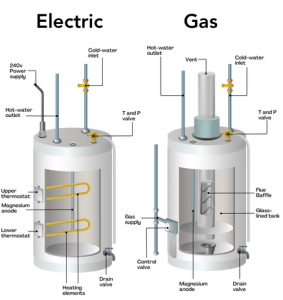 Image courtesy of The Craftsman Blog
Draining and flushing a water heater will typically have these steps:
- Turn Off Power Source of Water Heater
- Turn Off Cold Water Inlet
- Attach a Hose to the Drain Valve
- Release the Airlock
- Open the Drain Valve
- Flushing
- Closing and Refilling the Unit
- Turn on Unit Fuel Sources
Turning off the Water Heater
This step is vital, it prevents personal injury and damage to the water heater. If the water heater is powered by gas, turn off the gas valve, it should be a small, often red, lever attached to a metal tube that is attached to the ribbed tube. If a water heater is electric, it can be simply turned off, either at the breaker or by unplugging it.
Turning Off Cold Water Inlet
The cold water inlet is turned off so the unit can drain. The cold water inlet will be at the top of the water heater, ideally the cold water and hot water inlet are labeled with red and blue markers respectively for easy identification, but not guaranteed. If they’re unmarked, carefully feeling the pipes themselves helps determine which is the cold water.
Attach a Hose to the Drain Valve
The drain valve of water heaters is located in the front part of the unit, near the bottom. To drain, a garden hose can be attached to the valve to lead the water to either a drain in the floor or outside. If a garden hose is not accessible, a washing machine hose works too if a drain is near.
Release the Airlock
To release the airlock so the unit can begin draining, one of the faucets is turned to “hot” so that air can enter the system and begin draining the unit. If the water heater does not begin draining once the drain valve is opened (next step), the pressure- release (PT) valve may need to be opened.
Open Drain Valve
To empty the water heater, the drain valve is opened. A screwdriver may be used to open the valve. Generally, one drains about 3-4 gallons or until the water runs clear to remove sediment, caution should be used when handling draining materials as the draining water will be very hot.
Flushing
To flush sediment, the drain and PT valve should be closed. Then the cold water supply valve is opened a few times. This will allow fresh water to run in, and then out with the sediment.
Closing and Refilling the Unit
When the sediment is cleared, the draining valve is closed and the hose is disconnected. Remember that the hose may be hot, and it should be handled with great care! The hot water is turned off from the faucet that was previously turned on in step 4. Next, the water supply valve is turned back on. Wait about 15 minutes, then, the hot water is turned back on at the faucet. Do not be alarmed at sputtering, cloudiness, and air bubbles, the pipes are clearing and it should go away after a few minutes. Once the water flow returns back to normal, turn off the faucet.
Turn on Unit Fuel Sources
Now, the pilot light is reignited or the electric is turned back on for the unit, finishing the draining and flushing process. Now the water heater is back in service for another 6 months to a year!*
Our PLUMBERZ are licensed and insured experts and have fully stocked trucks ready to go for all of your plumbing needs. Rain or shine Z PLUMBERZ® will answer the call. Call or book online with us today to book for your commercial space or home!
Does the water heater need a drain?
Book a plumber near you online today!
*ZPLUMBERZ or any affiliates is not responsible for any errors or damages from attempting to drain and flush your own water heater. If you are unsure of doing this yourself or have never drained/flushed your water heater before, please consult a professional, licensed plumber before doing any DIY maintenance on your water heater. This blog is meant to inform owners of a water heater on the process of water heater draining, but not a comprehensive guide.
Expert Tips
Yearly Plumbing To-Do List
Doing periodic plumbing inspections and maintenance can prevent catastrophe later on and allows you to plan ahead! A guide for…
Lights Out! How to Prevent Frozen Pipes During Power Outages in Toledo
Perhaps you won’t think of it initially, but if a power outage lasts long enough, your pipes could freeze without…
Read more about how to properly address a blockage at home and why you should reconsider the Drano
Drano? Drain NO!
Thinking about using Drano in your Toledo home? Think again! Drano can cause more harm than good.
