What Causes Noisy Pipes? A Guide to Common Plumbing Sounds
You turn off the kitchen faucet and hear a loud bang from somewhere inside the wall. Maybe your pipes whistle when you take a shower, rattle when the washing machine runs, or make a ticking sound after you use hot water.
Unusual plumbing noises can be frustrating, especially when you can’t tell where they’re coming from. Some sounds are a normal part of your plumbing system’s operation, while others may indicate loose pipes, water pressure problems, or worn components.
Learning what different plumbing sounds mean can help you recognize potential problems and determine when it’s time to call a plumber.
Why Do Plumbing Pipes Make Noise?
Your plumbing system relies on water moving through pipes, valves, and fixtures at different pressures and temperatures. As water flows, stops, or changes direction, it can create movement and vibrations within the system.
Normally, these changes produce little noticeable noise. However, certain conditions can make those sounds louder or more frequent.
Common causes of noisy plumbing pipes include:
- Sudden changes in water flow: Quickly closing valves can create pressure surges.
- Loose pipes: Water movement may cause unsecured pipes to vibrate against nearby surfaces.
- High water pressure: Excessive pressure can contribute to humming and vibration.
- Worn components: Aging valves, washers, and fixtures may produce unusual sounds.
- Temperature changes: Hot water can cause pipes to expand and contract.
The timing of a noise can be just as revealing as the sound itself. A bang when water shuts off, for example, often points to a different issue than a whistle that continues while a faucet runs.
What Causes Banging or Knocking Pipes?
A loud bang after shutting off a faucet is one of the most recognizable plumbing noises. Although this sound is commonly associated with water hammer, loose or poorly supported pipes can create similar disturbances.
Water Hammer
Water hammer occurs when moving water suddenly stops or changes direction, creating a pressure surge inside the plumbing system. The resulting shock can travel through the pipes and produce a noticeable bang or thud.
For example, when your washing machine finishes filling, its automatic valve may close quickly. The sudden change in water flow can send a pressure wave through the supply pipes, making the sound especially noticeable near appliances with fast-closing valves.
Occasional water hammer doesn’t necessarily mean your pipes are damaged. However, repeated pressure surges can place additional stress on plumbing connections and fixtures, making it worth investigating if the banging becomes frequent.
Depending on the cause, a plumber may recommend installing a water hammer arrestor, adjusting water pressure, or improving pipe supports.
Loose Water Supply Pipes
Not every knocking sound comes from water hammer. Sometimes, pipes move because they aren’t adequately secured to the surrounding structure.
When water starts or stops flowing, an unsecured pipe may shift and strike a wall stud, floor joist, or nearby surface. Unlike a single water hammer bang, loose pipes may produce repeated knocking or rattling while water is running.
Securing the affected pipe can often reduce the noise, although the repair depends on the pipe’s location and accessibility.
Why Do Water Pipes Whistle or Squeal?
High-pitched plumbing noises often occur when water passes through a restricted opening or causes an internal component to vibrate. You may hear whistling when opening a faucet, flushing a toilet, or running a shower.
If the sound changes when you adjust the water flow, a valve or fixture component may be responsible. The location of the noise can also help determine whether the problem affects one fixture or a larger section of your plumbing system.
Partially Closed or Worn Valves
A valve that isn’t fully open can restrict water flow and create turbulence. Under certain conditions, this may produce a whistling or squealing sound.
Worn internal valve components can also vibrate as water passes through them. If the noise occurs only when using one fixture, its shutoff valve or internal parts may need attention.
Faucet and Toilet Components
Faucet cartridges, washers, and toilet fill valves can develop problems that cause high-pitched noises. These sounds are often most noticeable when water begins flowing or a fixture is operating at a particular setting.
For example, a toilet that whistles while its tank refills may have a worn fill valve. Similarly, a faucet that squeals at certain flow settings may have an internal component that needs replacement.
When the sound is isolated to one fixture, repairing the affected component may resolve the problem without requiring extensive plumbing work.
Why Are My Pipes Humming or Vibrating?
A low humming or buzzing sound can be difficult to locate because vibrations may travel through connected pipes and surrounding building materials. Sometimes, the sound seems to come from a wall or floor even though the source is elsewhere in the plumbing system.
Unlike banging that occurs when water stops, humming often continues while water is flowing. This pattern may point to water pressure conditions or a component vibrating during operation.
Excessive Water Pressure
Water pressure that’s too high can contribute to vibration and noise as water passes through fixtures and valves. You may notice the humming at several fixtures rather than in one specific location.
If the sound occurs throughout your home, having the water pressure checked may help identify the cause. A plumber can measure the pressure and determine whether a pressure-reducing valve is present and functioning properly.
Vibrating Plumbing Components
A worn valve or another internal plumbing component may vibrate as water flows past it, creating a humming or buzzing sound. These vibrations can travel through connected pipes, making the noise seem more widespread than it actually is.
Paying attention to which fixtures or appliances trigger the sound can help narrow down the source. A noise that occurs only when one faucet runs, for example, may indicate a different problem than humming throughout the house.
What Causes Clicking or Ticking Sounds in Plumbing Pipes?
If you notice clicking or ticking after running hot water, thermal expansion may be responsible. As hot water moves through supply pipes, the pipe material warms and expands slightly. When the pipes cool, they contract.
This movement can create ticking sounds where pipes contact framing or other building materials. You may hear these noises after a hot shower, while using a sink, or when running a dishwasher connected to a hot water line.
Thermal expansion is a normal physical process, so occasional ticking doesn’t necessarily indicate a problem. However, persistent or unusually loud sounds may suggest pipes are rubbing against framing or lack adequate clearance.
A plumber can evaluate the affected area and determine whether adjusting pipe supports or contact points would help reduce the noise.
Why Do Drains Gurgle or Bubble?
While banging, whistling, and ticking usually involve water supply pipes, gurgling often comes from a different part of your plumbing system. Your drainpipes rely on gravity and proper venting to carry wastewater away.
When drainage or airflow becomes restricted, you may hear bubbling or gurgling as water moves through the pipes. The cause may involve a localized drain blockage or a problem affecting ventilation within the drainage system.
Partial Drain Blockages
A buildup of grease, soap residue, hair, or other debris can restrict wastewater flow. As water moves around the obstruction, changes in airflow may create gurgling sounds.
You might also notice that the affected sink, tub, or shower drains more slowly than usual. When these symptoms occur together, a partial blockage may be contributing to the problem.
Drain Venting Problems
Plumbing vents help maintain proper air pressure within the drainage system. If a vent becomes obstructed or isn’t functioning correctly, pressure changes can produce unusual sounds at nearby fixtures.
Gurgling can also occur when a larger drain line has a blockage. If multiple fixtures are affected, the issue may extend beyond an individual sink or shower drain and require a closer examination of the drainage system.
How to Identify Different Plumbing Sounds
Plumbing noises can travel through walls, floors, and connected pipes, so the loudest location isn’t always where the problem originates. Paying attention to when the sound occurs can help you recognize patterns and describe the issue more accurately.
The following comparisons can help you distinguish common plumbing sounds:
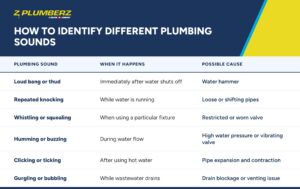
These patterns provide useful clues, but they aren’t a definitive diagnosis. Different plumbing conditions can produce similar sounds, particularly when pipes are concealed behind finished surfaces.
It’s also worth noticing whether a noise occurs with hot water, cold water, or both. If it happens only when a particular appliance runs, that information can help a plumber focus the investigation.
When Should You Be Concerned About Noisy Pipes?
Some plumbing noises remain relatively unchanged for years, while others become more frequent as the underlying condition develops. Occasional ticking from temperature changes may simply be part of your plumbing’s normal operation.
However, repeated water hammer can place ongoing stress on pipe connections and fixtures. Likewise, a worn valve may become noisier as it deteriorates, while a developing drain blockage may eventually affect how quickly wastewater flows.
Consider having your plumbing evaluated if you notice:
- Increasing noise: Banging, humming, or rattling becomes louder or more frequent.
- Multiple affected fixtures: The same unusual sound occurs throughout your home.
- Changes in water flow: Noises appear alongside reduced pressure or inconsistent flow.
- Recurring drainage problems: Gurgling accompanies slow drains or repeated clogs.
Not every unusual sound indicates a serious plumbing problem, but persistent changes are worth investigating. This is particularly true when the noise begins affecting how your plumbing system operates.
How Plumbers Diagnose and Fix Noisy Pipes
An effective repair starts with identifying what’s creating the noise rather than simply trying to quiet it. Depending on your symptoms, a plumber may check water pressure, inspect accessible supply lines, examine fixture valves, or determine whether pipes have adequate support.
When the noise involves drainage, evaluating the affected drain and venting system may be necessary. The appropriate repair depends on which part of the plumbing system is responsible.
Common repairs include:
- Securing loose or vibrating pipes
- Repairing or replacing worn valves
- Installing water hammer arrestors where appropriate
- Correcting excessive water pressure
- Clearing drain obstructions
Not every noisy pipe requires major repairs or opening a wall. In many cases, observing when the sound occurs and inspecting accessible components can help identify the problem and determine the appropriate repair.
Get Help With Noisy Plumbing Pipes in Ann Arbor
Strange plumbing noises can be distracting, but they can also provide clues about how your plumbing system is functioning. Whether you’re hearing banging pipes, whistling faucets, or gurgling drains, identifying the cause is the first step toward resolving the problem.
Z PLUMBERZ of Ann Arbor provides residential plumbing services for homeowners experiencing unusual plumbing noises, water pressure concerns, and drainage problems. Our team can evaluate your concerns and recommend appropriate repair options based on what we find.
Tired of hearing strange noises from your plumbing? Contact Z PLUMBERZ of Ann Arbor today to schedule plumbing service and find out what’s causing the sounds in your home.
Expert Tips
What to Know About Aging Plumbing in Older Homes
Understanding how plumbing systems age can help you recognize potential issues, make informed repair decisions, and determine when upgrades may…
5 Signs Your Garbage Disposal Needs Repair or Replacement
Knowing what different symptoms mean can help you decide whether you’re dealing with a repair or whether garbage disposal replacement…
Fall Plumbing Checklist for Ann Arbor Homeowners: What to Do Before the First Freeze
Use this fall plumbing checklist to work through the parts of your home that deserve attention before the first freeze,…